Happy Year of the Horse — a symbol of elegance, strength, and graceful power. For luxury brands entering or expanding in China, these qualities aren’t just aspirational; they’re essential. The Chinese luxury consumer is sophisticated, discerning, and increasingly experienced. They’ve seen the flashy productions. They’ve attended the generic galas. What they remember—what moves them—is refinement.
At ING Entertainment, we’ve crafted performances for automotive unveils, fashion presentations, and premium brand celebrations across China. Here’s how we approach the choreography of luxury: where restraint speaks louder than spectacle, and every detail whispers quality.
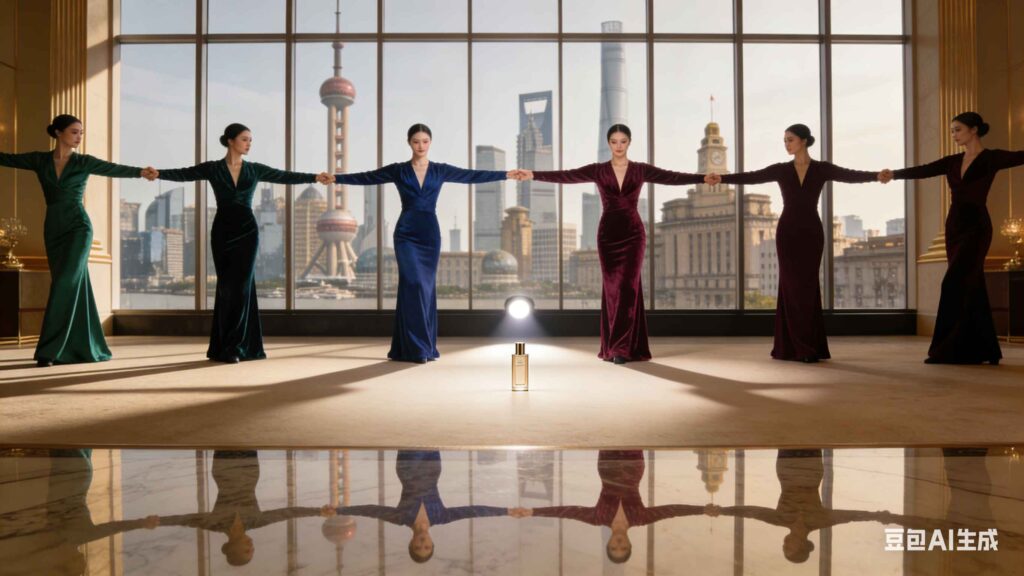
Context & Overview
Luxury in China is a language unto itself. The country now accounts for nearly half of global luxury consumption, with a consumer base that’s younger, more digital, and more culturally aware than any other market. But sophistication doesn’t mean “more.” It means “exactly right.”
For event producers, this demands a fundamental shift in thinking. Luxury choreography isn’t about maximum energy—it’s about intentional energy. It’s not about filling every second—it’s about letting moments breathe. It’s not about showing everything—it’s about revealing selectively.
Below is our playbook for designing premium brand moments that resonate with China’s luxury audience, from movement vocabulary to music editing, wardrobe to venue selection.
The Psychology of Chinese Luxury Consumers
Before designing movement, we study who’s watching.
What Chinese luxury consumers value:
| Value | What It Means for Performance |
|---|---|
| Heritage & Craftsmanship | Precision matters. Every gesture should look practiced, perfect, intentional. |
| Understated Status | Blatant logos feel gauche. Subtle quality signals—fabric texture, refined lines—speak louder. |
| Cultural Intelligence | Western concepts translated respectfully, not transplanted carelessly. |
| Exclusivity | The audience should feel they’re witnessing something not everyone gets to see. |
| Social Currency | Moments must be photographable, shareable, worthy of a Weibo or Little Red Book post. |
These values shape every creative decision, from casting to costuming to camera angles.
Movement Vocabulary: Less Is Truly More
In luxury choreography, we subtract before we add.
The Luxury Movement Principles:
1. Precision Over Power
A mass-market festival opener needs explosive energy. A luxury reveal needs exacting precision. Every arm angle, every head tilt, every transition is rehearsed to millimeter accuracy. Imperfection reads as “cheap.”
2. Negative Space as Luxury
Crowded staging feels chaotic. Luxury choreography uses negative space deliberately—dancers positioned to create visual breathing room, allowing the eye to rest on the product or the key performer. Empty space on stage signals confidence.
3. Slow = Premium
Fast movement reads as excitement. Slow, controlled movement reads as luxury. We extend counts, hold positions longer, and let transitions unfold deliberately. The audience leans in rather than being hit over the head.
4. Geometry That Frames, Not Overwhelms
Formations are designed to frame the product or brand moment, not compete with it. V-shapes that point toward the reveal. Arches that create sightlines. Symmetry that feels stable and trustworthy.
5. The “One Gesture” Rule
In luxury performances, we often give a single, memorable gesture per section—a unified arm sweep, a synchronized head turn, a ripple that travels through the corps—rather than constant movement. One beautiful thing, perfectly executed, lingers in memory.
Casting for Luxury: Presence Over Performance
Not every talented dancer has the right presence for luxury work.
What we look for:
- Refined physicality: Long lines, elegant port de bras, controlled energy
- Maturity: Young dancers can read as “youthful energy”—sometimes right, sometimes not. Luxury often calls for poised, mature presence.
- Neutral beauty: Striking but not distracting features that don’t pull focus from the brand
- Adaptability: Dancers who can shift between contemporary, classical, and character work as the concept demands
Role types in luxury productions:
| Role | Function |
|---|---|
| The Anchor | Centered, grounded performer who holds visual focus during key moments |
| The Framers | Ensemble members who create geometry around the product or anchor |
| The Soloist | Featured performer for brief, elegant moments—never overpowering the brand |
| The Character | When heritage integration is needed (e.g., a subtle Bian Lian reference in movement) |
For ING Girls in luxury contexts, we often reduce the unit size, focus on solo or trio configurations, and emphasize elegant lines over high-energy hip-hop vocabulary.
Music: The Architecture of Emotion
Music for luxury events follows different rules than commercial productions.
Key considerations:
- Dynamics over volume: Luxury spaces are often quieter. Music breathes. We design dynamic arcs that swell and recede rather than sustaining peak energy.
- Live instrumentation where possible: A single erhu, pipa, or string quartet reads as premium. Recorded tracks must sound pristine—no compression artifacts.
- Cultural fusion with restraint: Western classical meets Chinese traditional, but not as a mashup. As a conversation.
- Space for silence: The most luxurious moments sometimes have no music at all—just the sound of fabric, footsteps, or a held breath.
Sample musical arc for a 6-minute luxury reveal:
| Section | Duration | Musical Character |
|---|---|---|
| Opening tableau | 0:00–0:45 | Sparse strings or piano, single melodic line |
| Build | 0:45–1:30 | Gentle layering, percussion enters subtly |
| Approach to reveal | 1:30–2:15 | Tension building, dynamic swell |
| THE REVEAL | 2:15–2:30 | Musical peak, then sudden cut to silence |
| Product focus | 2:30–3:45 | Minimal ambient sound, spoken word or none |
| Engagement | 3:45–5:00 | Elegant resolution, music returns softly |
| Exit tableau | 5:00–6:00 | Fade to single instrument, held final note |
Wardrobe: Fabric as Communication
In luxury performances, costumes aren’t just clothes—they’re brand statements.
Our wardrobe principles:
1. Quality Reads Immediately
Cheap fabric photographs cheaply. We source materials with weight, drape, and light response that signals quality even from row 30 and on LED close-ups.
2. Color with Intent
Red and gold say “celebration” and “fortune”—appropriate for certain luxury contexts (Chinese New Year, heritage moments). But often, luxury calls for:
- Deep jewel tones: Emerald, sapphire, burgundy
- Monochromatic palettes: All black, all white, tonal grays
- Metallic restraint: One gold accent, not a gold costume
3. Silhouette That Flatters Movement
Luxury choreography requires clean lines. Costumes are tailored to hold their shape through movement, with fabrics that don’t wrinkle, bunch, or catch light unpredictably.
4. LED Compatibility
Matte finishes, tested against the specific LED wall to prevent moiré and flare. Shiny fabrics used sparingly and strategically.
5. Cultural Details, Subtly Placed
A mandarin collar here, a knotted button there. References, not reproductions. The audience should feel the cultural intelligence without being hit over the head with it.
Venue Selection: Setting the Stage for Luxury
Not every beautiful venue works for luxury events. We look for:
Architectural integrity: Spaces with inherent elegance—museums, opera houses, heritage buildings, modern galleries with clean lines
Acoustic control: Luxury audiences shouldn’t have to strain to hear or be blasted by sound. Venues with good natural acoustics and controllable systems.
Sightlines that honor intimacy: Even in larger spaces, every guest should feel they have a “good seat.” We design for 360-degree viewing when possible.
Production values that match: Fine-pitch LED (1.5–2.6mm), silent rigging, quiet movers—equipment that doesn’t distract.
Beijing & Shanghai options:
- Beijing: Opera houses, museums, heritage courtyards
- Shanghai: Art galleries, riverfront venues, modernist spaces
Provincial capital gems:
- Zhengzhou: Henan Art Center (opera house acoustics, classical aesthetic)
- Chengdu: Contemporary Image Museum (striking architecture, gallery vibe)
- Wuhan: Grand Theatre (proscenium stage, fly tower, orchestra pit)
Camera Strategy for Luxury
Luxury moments must photograph beautifully. Period.
Our camera principles:
1. Hero angles that flatter
We map camera positions that capture performers and products at their most elegant—slightly elevated, slightly wide, capturing negative space.
2. Slow camera movement
Fast whip pans and crash zooms feel cheap. Luxury camera work glides. We use stabilized heads, jibs with slow arcs, and locked-off beauty shots.
3. Press frames built into choreography
Specific moments where the choreography holds for 3–5 seconds—long enough for photographers to capture, short enough not to feel static.
4. Close-up moments
The texture of fabric. The expression in a dancer’s eyes. The product’s fine details. We build moments that reward close-ups.
5. No moiré, no flare
Rigorous testing ensures that when the cameras push in, the image stays pristine.
Case Study: Luxury Automotive Reveal (Disguised)
The brand: European luxury automaker, launching their first all-electric sedan in China
The audience: 200 VIP clients, media, and KOLs in a Shanghai art museum
The challenge: Communicate “heritage meets innovation” without cliché
Our approach:
- Casting: 12 dancers, mixed gender, elegant lines, mature presence
- Movement vocabulary: Contemporary ballet fusion—precise, extended, controlled
- Music: Original composition blending Western strings with subtle electronic undertones, performed live by string quartet
- Wardrobe: Deep teal and charcoal, matte silks, clean silhouettes, one gold accent per costume
- Staging: Car revealed through dancer formation parting—no mechanical lifts, no pyro, just bodies moving with intention
- Camera: Three locked-off beauty cameras, one Steadicam for fluid movement, press moment built into 10-second tableau post-reveal
The result: Guests lingered afterward, photographing the car against the dancers’ final tableau. Media coverage emphasized “elegance” and “restraint.” The brand booked us for their next two launches.
The ING Difference for Luxury Brands
| What Luxury Brands Need | What ING Delivers |
|---|---|
| Understated sophistication | Refined movement vocabulary, intentional pacing, negative space design |
| Cultural intelligence | Heritage integration that’s respectful, not cliché |
| Flawless execution | Broadcast-ready discipline applied to every detail |
| Visual elegance | Camera-aware staging, premium wardrobe, LED testing |
| Emotional resonance | Music architecture that moves without overwhelming |
| Exclusivity | Performances that feel like private viewings, not public spectacles |
Takeaways for Luxury Brands Planning China Events
- Restraint is a luxury signal. Don’t fill every moment—let some breathe.
- Precision over power. The audience should feel the hours of rehearsal in every gesture.
- Music needs space. Dynamic arcs, silence, and live instrumentation signal quality.
- Wardrobe whispers quality. Fabric, fit, and finishing matter more than flash.
- Camera strategy isn’t optional. Luxury moments must photograph beautifully.
- Choose venues with integrity. The space should enhance, not compete.
- Work with partners who understand both luxury and China. The two together require specialized fluency.
Ready to Create Something Elegant?
The Year of the Horse rewards those who move with grace and purpose. If you’re planning a luxury brand moment in China—an automotive reveal, a fashion presentation, a VIP gala, a cultural activation—ING Entertainment brings the refinement, precision, and cultural intelligence your brand deserves.
Let’s discuss your vision. We’ll propose creative directions that whisper quality, design movement that frames your product perfectly, and deliver a performance that China’s most discerning audiences will remember.