For international brands entering or expanding in China, these qualities aren’t just desirable; they’re essential. But here’s the challenge that keeps global marketing directors awake at night:
How do we stay true to our global brand identity while creating moments that genuinely resonate with Chinese audiences?
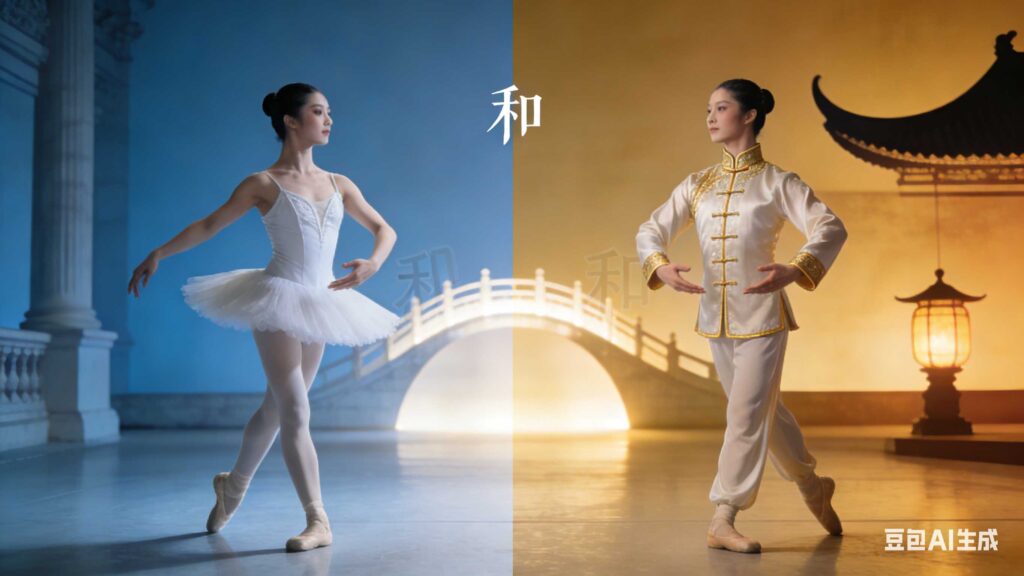
At ING Entertainment, we’ve helped international automotive, luxury, technology, and consumer brands answer this question across hundreds of events—from Beijing TV galas to Shanghai auto reveals to Zhengzhou cultural ceremonies. Below is our strategic framework for adapting international creative for Chinese audiences without losing what makes your brand unique.
Context & Overview
China is not a monolith. But it does have distinct cultural patterns, audience expectations, and communication preferences that differ from Western markets. The brands that succeed here don’t transplant global campaigns unchanged—and they don’t abandon their identity to chase local trends. They find the sweet spot: global standards, local flavor.
This post explores the key dimensions of adaptation: movement vocabulary, music, humor, storytelling, cultural symbols, and audience psychology. For each, we explain what works, what doesn’t, and how ING helps international brands land gracefully.
The Core Tension: Consistency vs. Resonance
| Global Brand Imperative | Chinese Audience Expectation |
|---|---|
| Recognizable identity | Cultural relevance |
| Consistent messaging | Local authenticity |
| Global production standards | Emotional resonance |
| Brand safety | Social shareability |
The brands that succeed find the overlap. They don’t choose one over the other—they find expressions that satisfy both.
ING’s role: We help international brands identify and execute that overlap through culturally intelligent creative direction, casting, choreography, and production.
Dimension 1: Movement Vocabulary — What Reads Where
Not all movement translates equally across cultures.
What works globally:
- Precision and synchronization (universally admired)
- High energy (reads as excitement everywhere)
- Clean lines and formations (professionalism)
What needs adaptation for Chinese audiences:
| Western Movement Style | Chinese Audience Response | Adaptation |
|---|---|---|
| Aggressive, confrontational stances | Can read as threatening or rude | Soften angles, open body language |
| Overly casual or “messy” choreography | Reads as unprepared or amateur | Cleaner lines, intentional spacing |
| Individualistic spotlight moments | Can feel excluding of ensemble | Balance solo with group acknowledgment |
| Fast, frenetic pacing | Fatigue after 30–60 seconds | Build in “breath” moments, dynamic arcs |
| Hip-hop with heavy swagger | May not land if performer doesn’t have authentic street credibility | Cast Chinese dancers with genuine connection to the style |
ING’s approach:
We start with your global choreography and test it against Chinese audience sensibilities. Sometimes the adjustment is subtle—a softened arm angle, a held breath, a formation that frames rather than confronts. Sometimes it’s a full re-choreography with the same energy but different vocabulary. We never guess—we draw on years of audience feedback and broadcast results.
Dimension 2: Music — The Emotional Bridge
Music is perhaps the most culturally specific element of any performance.
What translates well:
- Orchestral and cinematic scores (emotional, universal)
- Global pop with strong melody (if the artist is known in China)
- Rhythmic, percussive tracks (energy transcends language)
What needs careful handling:
| Western Music Element | Chinese Audience Response | Adaptation |
|---|---|---|
| Lyrics in English only | Missed emotional connection if audience doesn’t understand | Add Chinese vocal version or instrumental focus |
| Heavy bass/drop-focused EDM | Can feel aggressive or chaotic | Balance with melodic elements |
| Rock with distorted guitar | Niche audience only | Consider remix with traditional instrument overlay |
| Hip-hop with explicit lyrics | Content review risk, potential rejection | Clean edits, instrumental versions ready |
| Obscure Western artists | No recognition, no emotional hook | Build context through visual storytelling |
ING’s approach:
We maintain relationships with Chinese music licensing agencies and work with composers who understand both Western production values and Chinese melodic sensibilities. For international brands, we often create hybrid tracks—Western orchestration with Chinese instrument accents (erhu, pipa, guzheng)—that feel globally premium and locally respectful.
Real example: For a European automotive brand launch, we took their global campaign music—a cinematic orchestral piece—and added a subtle erhu countermelody during the reveal moment. The Chinese audience leaned in. The global brand team loved it. No cliché, just a single thread of cultural recognition.
Dimension 3: Humor and Tone — Proceed with Caution
Humor is the riskiest element to translate.
What you should know:
- Wordplay rarely translates
- Sarcasm often lands as genuine criticism
- Self-deprecation can read as low confidence (not endearing)
- Slapstick can work if culturally neutral
- Warm, genuine moments outperform jokes
What works in China events:
- Sincere, aspirational storytelling
- Emotional arcs with clear resolution
- Respectful acknowledgment of cultural values (family, harmony, perseverance)
- Surprise and delight (unexpected visual moments)
- Pride-inducing moments (celebration of achievement)
What to avoid:
- Jokes about authority, politics, or social hierarchy
- Humor that relies on Western cultural references
- Satire or irony (often misunderstood)
- Mocking any Chinese cultural element
ING’s approach:
For international brands, we generally recommend minimizing humor in live event segments unless it’s simple, visual, and tested. Instead, we focus on emotional resonance—aspiration, beauty, excitement, pride—which translates reliably across cultures.
Dimension 4: Storytelling Arcs — East vs. West
Western storytelling often follows a “problem-solution” or “hero’s journey” arc. Chinese audiences respond to different narrative patterns.
| Western Arc | Chinese Audience Preference |
|---|---|
| Individual hero overcomes obstacles | Collective achievement, family/team harmony |
| Conflict → resolution | Balance → disruption → restoration |
| Linear, cause-effect | Cyclical, seasonal, natural rhythms |
| Direct, explicit messaging | Implicit, contextual, “read between lines” |
| Happy ending (explicit) | Satisfying resolution (often understated) |
What this means for event creative:
- Frame product launches as “bringing harmony” or “enabling progress” not “disrupting” or “beating competitors”
- Use imagery of connection, family, community—not just individual success
- Build moments that acknowledge heritage while celebrating innovation
- Let the audience complete the emotional arc—don’t over-explain
ING’s approach:
We work with your global narrative and find the Chinese expression. Sometimes that means reframing the opening—starting with context and harmony before introducing the product. Sometimes it means adding a collective moment—a formation that emphasizes ensemble over solo. The core story stays intact; the telling shifts.
Dimension 5: Cultural Symbols — Use Respectfully, Not Excessively
Red envelopes. Dragons. Pandas. Great Wall. Terracotta Warriors.
International brands love Chinese cultural symbols. Chinese audiences? They’ve seen them used badly.
The rule: One strong, well-executed cultural motif beats a montage of clichés.
| Approach | Audience Response |
|---|---|
| Seven different Chinese symbols in 60 seconds | “They don’t understand us. They just Googled ‘China.'” |
| One motif, thoughtfully integrated, with contemporary execution | “They respect us. This feels authentic.” |
What works:
- A single traditional instrument phrase woven into modern music
- Costume accents (mandarin collar, knotted button) not full traditional dress
- Formation geometry inspired by architecture or folk patterns (not literal reproduction)
- Seasonal references (Lunar New Year, Mid-Autumn) when timely
What doesn’t:
- Performers in “generic Asian” costumes
- Dragons and pandas because “China likes animals”
- Forced calligraphy or character projections
- Any symbol used without understanding its meaning
ING’s approach:
Our creative team includes Chinese cultural consultants who review every motif, color choice, and reference. We don’t guess—we know what lands and what feels dated or disrespectful. For international brands, we often recommend a single, subtle motif rather than multiple references. Less is almost always more.
Dimension 6: Audience Psychology — What Chinese Audiences Value
Understanding the audience is the foundation of adaptation.
What Chinese event audiences value:
| Value | What It Means for Performance |
|---|---|
| Face (mianzi) | The event should make attendees feel honored, special, privileged to be there |
| Harmony (he) | No jarring transitions, no confrontational moments, everything flows |
| Quality (zhiliang) | Production values must feel premium—cut corners are noticed |
| Authenticity (zhenshi) | Performers should be genuinely skilled, not “performing” authenticity |
| Shareability | Moments must be photographable, postable, worthy of social media |
| Exclusivity | Attendees should feel they experienced something not everyone gets |
| Respect for heritage | Traditional elements should be honored, not exploited |
ING’s approach:
We design every performance with these values in mind. “Face” means VIP sightlines and acknowledgment moments. “Harmony” means seamless transitions and intentional pacing. “Quality” means broadcast-ready production even for small events. “Shareability” means press frames built into choreography.
The ING Framework: Global Standards, Local Flavor
Here’s how we operationalize adaptation for international clients.
Step 1: Audit the Global Creative
We review your existing concept, music, choreography, and visuals against Chinese audience expectations. We flag risks and opportunities.
Step 2: Identify the “Non-Negotiable Core”
What must stay exactly as-is for brand consistency? We protect that fiercely.
Step 3: Propose Local Adaptations
For everything else, we suggest specific adaptations—movement modifications, music edits, narrative reframing, wardrobe adjustments—that increase resonance without compromising identity.
Step 4: Test and Refine
Where possible, we test concepts with Chinese audiences or draw on our database of past performance feedback.
Step 5: Execute with Bilingual Precision
Once approved, we deliver with the same broadcast-ready discipline for every show.
Case Study: Global Luxury Watch Brand
The challenge: A Swiss watchmaker wanted to launch a new collection in Shanghai. Their global creative featured Western classical ballet, English voiceover about “individual achievement,” and cool blue/white visuals.
The adaptation:
- Movement: Kept ballet precision but added two Chinese contemporary dancers as “framing” performers
- Music: Western string quartet + subtle guzheng accent during the reveal
- Narrative: Reframed from “individual achievement” to “legacy passed through generations” (resonates with Chinese family values)
- Visuals: Added warm gold accents to the cool blue/white palette (gold = prosperity, luck)
- Casting: Lead dancer was Chinese-trained but globally experienced
The result: The global team loved that their core identity (precision, heritage, luxury) remained intact. Chinese VIP guests commented on how “naturally” the brand understood them. The watch sold out its first allocation.
What Not to Do: Common Adaptation Mistakes
| Mistake | Why It Fails |
|---|---|
| Adding a lion dance to every event | Feels lazy, not thoughtful. Lion dance has specific meanings and contexts. |
| Using red and gold because “China likes red and gold” | These colors mean specific things. Use intentionally, not as a default. |
| Translating slogans literally | Often creates nonsense or unintended humor. |
| Assuming young Chinese audiences want Western culture | Young Chinese are proud of their heritage. They want fusion, not replacement. |
| Copying what a competitor did | Audiences notice and judge. Authenticity matters. |
Takeaways for International Brands
- Start with respect, not assumption. Chinese audiences are sophisticated. They’ve seen it all.
- Protect your core, adapt your expression. Your brand identity can stay intact while the execution shifts.
- One strong motif beats many weak references. Choose one cultural element and execute it beautifully.
- Test with local eyes before finalizing. What reads as “respectful” to you might read differently here.
- Work with partners who understand both worlds. ING bridges global creative standards and Chinese audience expectations.
Ready to Find Your Brand’s Chinese Expression?
The Year of the Horse is about graceful power and strategic momentum. If you’re planning an event in China and want to ensure your global brand resonates with local audiences without losing what makes you unique, ING Entertainment can help.
Let’s discuss your creative. We’ll audit your current concept, propose thoughtful adaptations, and deliver a performance that feels globally premium and locally authentic.